山田一憲
兼任・講師
専門分野:比較行動学、発達心理学、霊長類学
Field of research: ethology, primatology, and developmental psychology
研究キーワード: 行動、葛藤、社会的発達、適応進化、寛容性
Research keywords: behavior, social conflict, social development, adaptive evolution, tolerance
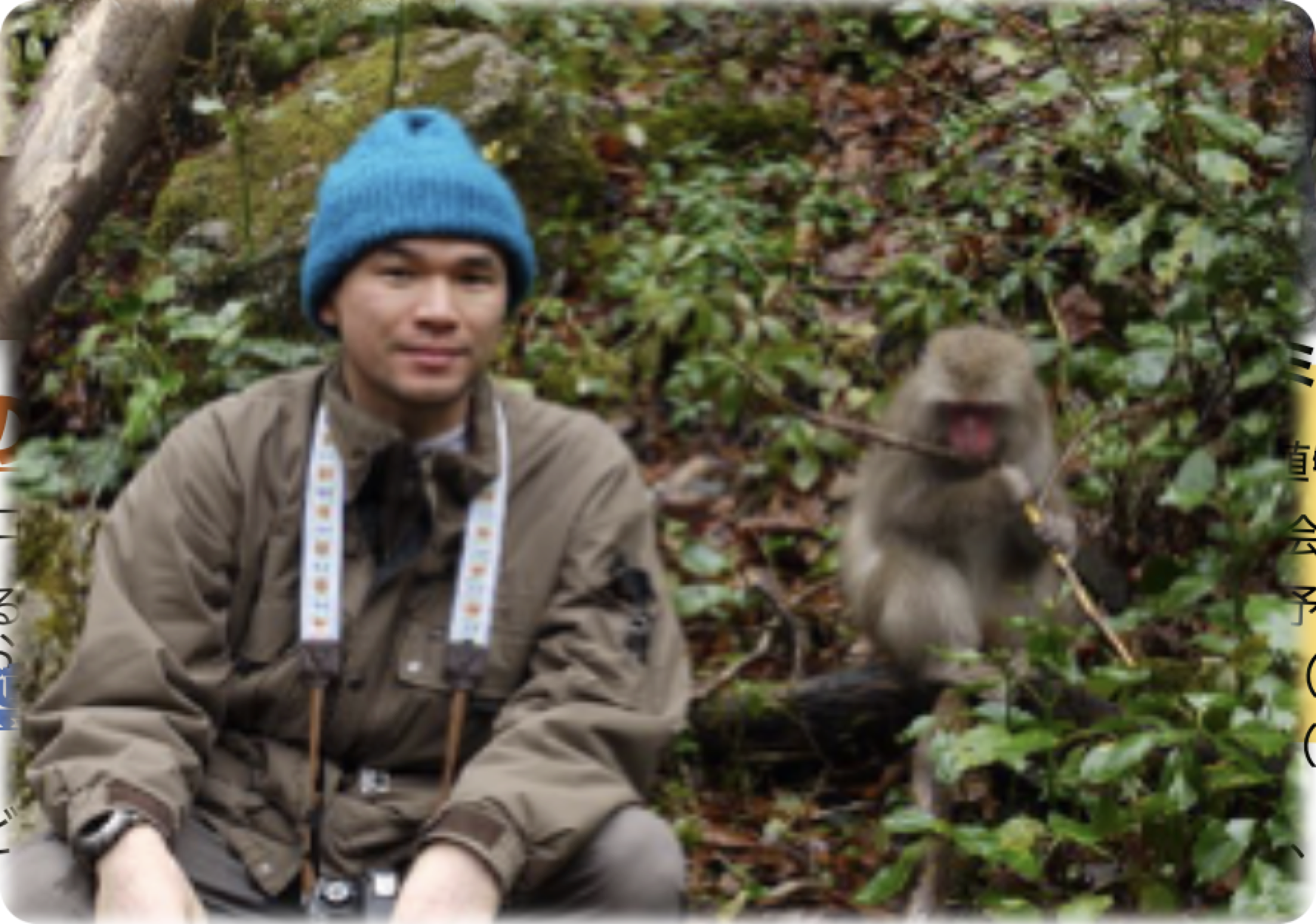
研究概要:ヒトや動物がどの様に生き、どの様に死んでいくのかに興味があります。彼ら/彼女らの生き様は、種や集団や個体によって違っている一方で、共通している点もみられます。最近は、勝山ニホンザル集団(岡山県真庭市)と淡路島ニホンザル集団(兵庫県洲本市)を対象とした比較研究を行い、それぞれの集団に見られる行動特性の違いが神経伝達関連遺伝子の多型と関連しているのかどうかを調べています。特に、淡路島のニホンザルは、特異的に寛容な攻撃性の低い社会を形成していることが明らかになっています。社会の多様性がどのような理由で生じるのか(文化や遺伝的背景)、それによって個体の生き方がどのように変わっていくのかを発達的に検討したいと考えています。
Research: The goal of my research is to investigate the roots of human sociality.I work with the free-ranging Japanese monkeys (Macacafuscata) in Japan. We can be aware of the evolutionary similarity between human and nonhuman primates through field observation of their social behaviors. My current research focuses on group differences in tolerance and aggression of Japanese monkeys. They form highly hierarchical and despotic societies and dominant monkeys attack subordinates in order to monopolize resources.The monkeys living in Awaji Island, however, construct an exceptionally tolerant social structure compared to that of the other groups. Awaji’s dominant monkeys tend to share resources without aggression. Human beings are extraordinarilycooperative animals. The tolerance toward others seems to have played a role in evolution of cooperative behavior. I am investigating the reason why the Awaji monkeys show high-level tolerance by using measuring behavior, ecology, population genetics, and molecular biology.
 KanKyoLab