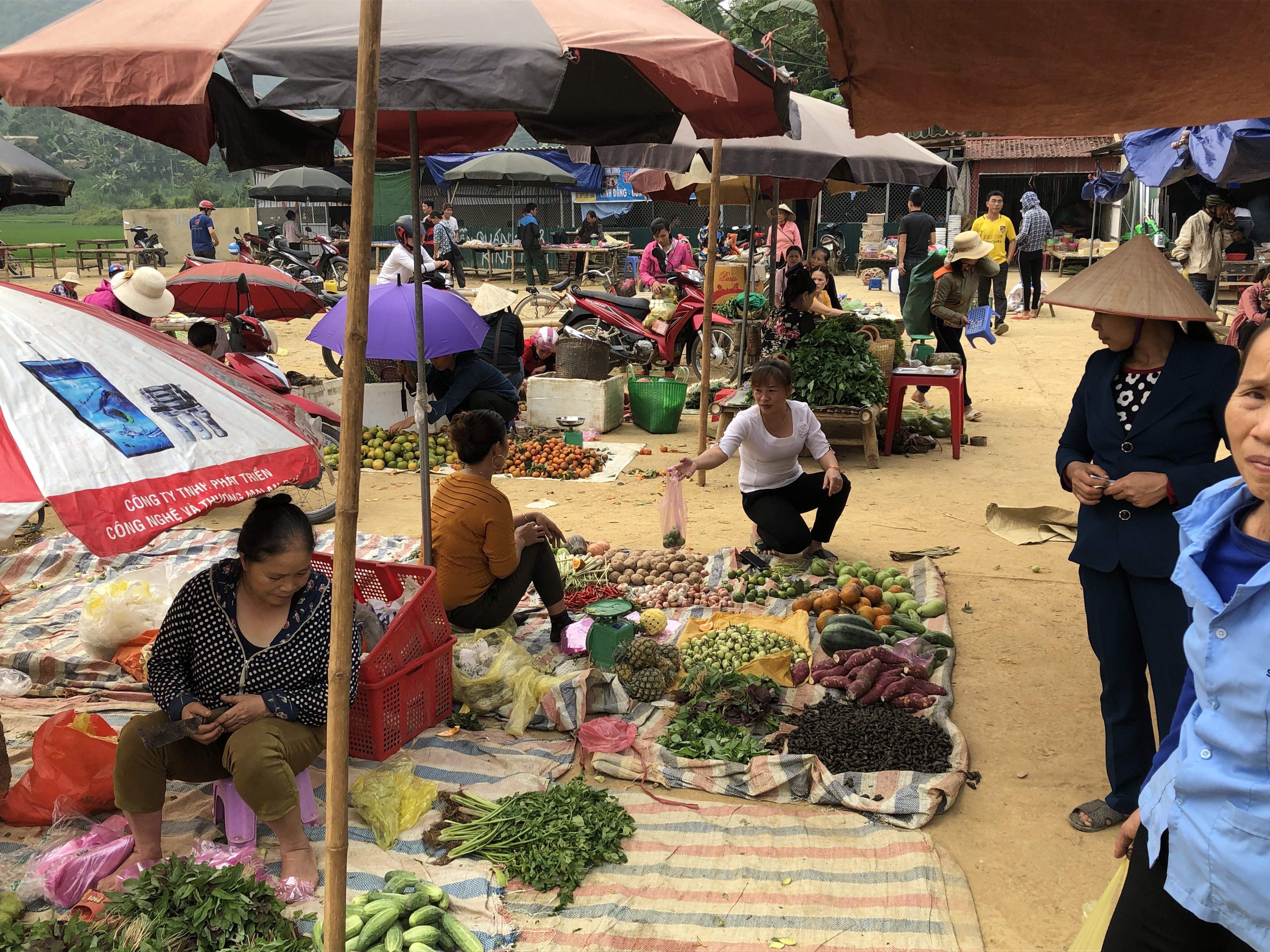
TAUGHT:
Spring/Summer 2024, Osaka University
TITLE:
More than Human Ethnographies
INSTRUCTOR:
TIME:
Tuesdays, 15:10~16:40 (4th Period)
PLACE:
School of Science, SC, Seminar Room B
CLASS CODES:
13A451 (G30, HuS); 881109 (others)
SYLLABUS:

COURSE DESCRIPTION
This course introduces students to current trends in anthropology, especially the move away from human exceptionalism in the past two decades. Participants will learn the emergence of more-than-human ethnographies, its methodological challenges, thematic array, and its potential as a research tool for deploying Japanese concepts (kyōsei, ikimono, shizen, etc.) for alternative understandings of human variation. The course is organised around six thematic clusters, each with a lecture and a seminar on two consecutive weeks. After introducing students to some of the most important debates of recent anthropology in the first cluster, the following four themes will provide an overview of the key concepts and methods that have fostered the ethnographic exploration of more-than-human worlds. Students will learn about the growing interest in embodied relations that has stimulated many anthropologists to move beyond the integrated human subject. Next, they will be introduced to current research that has expanded earlier interest in ecological entanglements to overcome the so called ontological divide between nature and culture. The fourth cluster will look at an emerging multispecies scholarship that seeks to attend to nonhuman beings—such as worms, trees, birds, microbes or rocks—on their own terms. This research has been intertwined with new lines of investigation into the planetary scales of human intervention that gained momentum in the 2010s with the increasing attention to environmental degradation, our fifth topic. The sixth and final cluster will overview some of the recent directions in anthropology both in and of Japan. We will discuss how such a body of knowledge can be instrumental in the understanding of the people and their environment on and beyond this archipelago. The course aims to provide students with a diverse foundation of more-than-human ethnographies, and study skills that are required for further levels of study in anthropology and the human sciences.
Learning Goals
By the end of this course students should:
- be familiar with anthropology as a distinctive discipline at the crossroads of the social, human and natural sciences
- build up a solid knowledge of current concepts and theories of more-than-human ethnographies
- be able to apply key theoretical approaches to explain everyday ecological relations, particularly the differences between multispecies universalities, generalities, and particularities
- be able to identify the key aspects of ethnographic fieldwork including its research techniques
- be able to critically read research literature and present persuasive and reflective analyses
- be able to participate in collaborative work such as class discussions and group assignments
Course Schedule
The class will consist of lectures, group discussions, with additional case studies and practical exercises. Everyone is required to read one academic text (c. 20-30 pages) before each class on even weeks. To prepare for the weekly WARM-UP QUESTIONS (submitted each week before the class from CLE), you will need to take notes on the main themes of the text and think about how these points relate to the class topics. In addition, everyone will be required to turn in one 5-600 words SYNOPSIS of an academic article and lead a discussion inspired by that text on odd weeks of the course.
#1
Apr 16
ORIENTATION
no assigned readings
#2
Apr 23
Anthropology, but not quite 1: Intro
*Assigned reading (for all): Matei Candea. 2018. “No actor, no network, no theory: Bruno Latour’s anthropology of the moderns.” Schools and Styles of Anthropological Theory. Matei Candea, ed. New York: Routledge, 209–223.
Further readings: Choy et al. 2009; de la Cadena 2009; Ingold 2010; Helmreich 2009; Latour 2017; Mol 2002
#3
Apr 30
Anthropology, but not quite 2: Eating
*Assigned reading (for presenters): Annemarie Mol. 2021. “Empirical philosophy.” In Eating in Theory. Durham: Duke University Press, 2–25.
Further readings: M’charek 2013; Mintz 2015; Paxson 2023
#4
May 7
Embodied differences 1: Introduction
*Assigned reading (for all): Emily Martin. 1992. “The end of the body?” American Ethnologist 19(1): 121–40.
Further readings: MacKenzie 2014; Kavedžija 2019; Taussig 1993
#5
May 14
Embodied differences 2: Healing
*Assigned reading (for presenters): Kuriyama Shigehisa. 1999. “Styles of touching.” In The Expressiveness of the Body and the Divergence of Greek and Chinese Medicine. New York: Zone Books, 17–111.
Further readings: Zhan 1999; Hsu 2007; Kitanaka 2020
#6
May 21
Environmental coexistence 1: Introduction
*Assigned reading (for all): Sebastian Abrahamsson and Filippo Bertoni. 2014. “Compost politics: Experimenting with togetherness in vermicomposting.” Environmental Humanities 4(1): 125–148. doi:10.1215/22011919-3614962
Further readings: Kinnunen 2017; Lorimer and Driessen 2014; Gilbert et al. 2012
#7
May 28
Environmental coexistence 2: Queering
*Assigned reading (for presenters): Honda Eiko 2023. “Minakata Kumagusu and the emergence of queer nature: Civilization theory, Buddhist science, and microbes, 1887–1892.” Modern Asian Studies 57(4): 1105–1134. doi:10.1017/S0026749X22000385
Further readings: Yoshimi 2006; Lee 2021; 南方 2015
#8
Jun 4
Multispecies ethnographies 1: Introduction
*Assigned reading (for all): Anna L. Tsing. 2014. “Blasted landscapes (and the gentle arts of mushroom picking).” In The Multispecies Salon. Eben Kirksey, ed. Duke University Press, 87–110.
Further readings: Despret 2016a; 2016b; Kohn 2007; Kirksey and Helmreich 2010; Hustak and Myers 2012
#9
Jun 18
Multispecies ethnographies 2: Living (together)
*Assigned reading (for presenters): Droz Laÿna, Romaric Jannel and Christoph Rupprecht. 2022. “Living through multispecies societies: Approaching the microbiome with Imanishi Kinji.” Endeavour 46: 100814. doi: 10.1016/j.endeavour.2022.100814.
Further readings: Raffles 2010; Brown and Nading 2019; Paxson & Helmreich 2014; Lorimer 2020
#10
Jun 25
Planetary infrastructures 1: Introduction
*Assigned reading (for all): Kregg Hetherington 2019. “Introduction. Keywords of the Anthropocene.” Infrastructure, Environment, and Life in the Anthropocene. Kregg Hetherington, ed. Durham: Duke University Press, 1–14.
Further readings: Gordillo 2018; Myers 2018; Thunberg 2022
#11
Jul 2
Planetary infrastructures 2: Polluting
*Assigned reading (for presenters): Joseph D. Hankins 2014. “Locating the Buraku: A Political Ecology of Pollution.” In Working Skin: Making Leather, Making a Multicultural Japan. Berkeley, CA: California: University of California Press, 93–120.
Further readings: Siniawer 2018; Malhi 2014; Liboiron et al 2018; Marran 2017
#12
Jul 9
Japan as method 1: Introduction
*Assigned reading (for all): Marilyn Ivy. 1995. “Narrative Returns, Uncanny Topographies.” In Discourses of the Vanishing: Modernity, Phantasm, Japan. Chicago: University of Chicago Press, 98–140.
Further readings: Jinnai 1985; Jensen and Morita 2012; Mohácsi and Morita 2013; Swanson 2019; Langlitz 2019
#13
Jul 16
Japan as method 2: Failing
*Assigned reading (for presenters): Michael Fisch. 2018. “Ninety Seconds.” In An Anthropology of the Machine: Tokyo’s Commuter Train Network. Chicago: University of Chicago Press, 206–259.
Further readings: Tsing 2015; Kimura 2016; Kenens et al. 2022
#14
Jul 23
Mini Workshop
#15
Jul 30
WRAP-UP
ASSIGNMENTS
First and foremost, (A) an engaged and thoughtful participation in class discussion is central, so students should come to class having read and understood the assigned text when required. The warm-up questions submitted from CLE and discussed at the beginning of each class are part of the participation component.
Each participant will be asked to provide (B) an analytical synopsis (1-3 pages) of one extra reading and submit it by the assigned class on an odd week of the course. It will be presented as part of a class discussion drawing on the ethnographic material and linking its principle arguments to the questions addressed in the class lecture. This book will also be the topic of their final assignment.
The final exam for this course is given in the form of group discussion called (C) Mini Workshop. Students will be given a list of questions, covering all the topics of the course, to take home one week before the exam to consider. On the day of the workshop they will be asked to (1) present their own constructive and reflective ideas on some of these questions, and (2) discuss them with their peers in a critical and persuasive way.
Cross-cultural case studies are used throughout the whole course. Students are also strongly encouraged to relate each topic to their own ethnic and cultural context and to their personal experiences.
(1) Attendance at 80% of all sessions (12<) is required
(A) 12 warm-up questions
(2) Students must complete all assessment components to pass the course
(B) 1 synopsis of an assigned reading
(C) final exam (mini workshop)*
* Missed test and exams. There will be no make-up test/exam without adequate documentation (such as a doctor’s or counselling certificate.
GRADING AND EVALUATION
Grading is based on the classwork, active participation in discussion, and the evaluation of midterm test and final exam.
- A: Class Exercises & Participation……30%
- B: Midterm test (written)………..…… 30%
- C: Mini workshop (end of semester)…40%
FURTHER REMARKS ON CLASS CONDUCT
1 Access to class materials (CLE). All course materials will be available from the CLE page of the class. If you are registered to the class, you can access the CLE page automatically.
2 Textbook. No textbook will be used for this class.
3 Language. The language of the course is English, as well as all reading assignments.
4 Plagiarism. Plagiarism of any sort, including the use of online content, is not allowed. If you are not sure about what is or is not considered plagiarism, consult the instructor.
5 Completion of writing assignments: All writing assignments must be submitted online from the CLE page of the course on or before the due date.
6 Class notes and audio-visual materials. Instruction in this class is augmented with a variety of complementary materials, such as video excerpts, slideshows or direct quotes from primary sources. Students are responsible for taking notes on these materials and incorporating them into their papers.
7 Missed test and exams. There will be no make-up test/exam without adequate documentation (such as a doctor’s or counselling certificate.
RESOURCES
Assigned and optional (further) readings will be available online and/or in hardcopy on reserve. Textbooks can be borrowed from the Osaka University Library system.
TEXTBOOKS
(Required)
none
(Optional)
Nina Brown, Laura Tubelle de González, and Thomas McIlwraith eds. 2020. Perspectives: An Open Invitation to Cultural Anthropology. 2nd Edition. American Anthropological Association. (available online at http://perspectives.americananthro.org/)
Matei Candea ed. 2018. Schools and Styles of Anthropological Theory. New York: Routledge.
桑山 敬己・綾部 真雄(編)2018『評論 文化人類学:基本と最新のトピックを深く学ぶ』ミネルヴァ書房。
Henrietta L. Moore and Todd Sanders. 2006. Anthropology in Theory: Issues in Epistemology. Malden, MA: Blackwell Publishing.
Emily Schultz A. and Robert H. Lavenda. 2013. Cultural Anthropology: A Perspective on the Human Condition. New York, Oxford: Oxford University Press.
ASSIGNED READINGS (for all)
Abrahamsson, Sebastian and Filippo Bertoni. 2014. “Compost Politics: Experimenting with togetherness in vermicomposting.” Environmental Humanities 4(1): 125–148. doi:10.1215/22011919-3614962
Candea, Matei. 2018. “No Actor, No Network, No Theory: Bruno Latour’s Anthropology of the Moderns.” Schools and Styles of Anthropological Theory. Matei Candea, ed. New York: Routledge, 209–223.
Hetherington, Kregg 2019. “Introduction. Keywords of the Anthropocene.” Infrastructure, Environment, and Life in the Anthropocene. Kregg Hetherington, ed. Durham: Duke University Press, 1–14.
Ivy, Marilyn. 1995. “Narrative Returns, Uncanny Topographies.” Discourses of the Vanishing: Modernity, Phantasm, Japan. Chicago: University of Chicago Press, 98–140.
Martin, Emily. 1992. “The end of the body?” American Ethnologist 19(1): 121–40.
Tsing, Anna L. 2014. “Blasted landscapes (and the gentle arts of mushroom picking).” In The Multispecies Salon. Eben Kirksey, ed. Duke University Press, 87–110.
ASSIGNED READINGS (1 for each presenter)
Droz Laÿna, Romaric Jannel and Christoph Rupprecht. 2022. “Living through multispecies societies: Approaching the microbiome with Imanishi Kinji.” Endeavour 46: 100814. doi: 10.1016/j.endeavour.2022.100814. (* for the Mini Workshop, read together with Raffles 2010)
Fisch, Michael. 2018. “Ninety Seconds.”In An Anthropology of the Machine: Tokyo’s Commuter Train Network. Chicago: University of Chicago Press, 206–259.
Hankins, Joseph D. 2014. “Locating the Buraku: A Political Ecology of Pollution.” In Working Skin: Making Leather, Making a Multicultural Japan. Berkeley, CA: California: University of California Press, 93–120.
Honda Eiko 2023. “Minakata Kumagusu and the emergence of queer nature: Civilization theory, Buddhist science, and microbes, 1887–1892.” Modern Asian Studies 57(4): 1105–1134. doi:10.1017/S0026749X22000385 (* for the Mini Workshop, read together with Lee 2021)
Kuriyama Shigehisa. 1999. “Styles of touching.”In The Expressiveness of the Body and the Divergence of Greek and Chinese Medicine. New York: Zone Books, 17–111.
Mol, Annemarie. 2021. “Empirical Philosophy.” In Eating in Theory. Durham: Duke University Press, 2–25.
FURTHER READINGS
Brown, Hannah and Alex M. Nading. 2019. “Introduction: human animal health in medical anthropology. “Medical Anthropology Quarterly 33(1): 5–23. doi: 10.1111/maq.12488
Carse, Ashley, Jessica Barnes, Samer Alatout 2012. “Nature as infrastructure: Making and managing the Panama Canal watershed.” Social Studies of Science 42(4): 539–563.
Choy, Timothy, Lieba Faier, Michael J.Hathaway, Miyako Inoue, Shiho Satsuka, Anna Tsing 2009. “A New Form of Collaboration in Cultural Anthropology: Matsutake Worlds.” American Ethnologist 36(2): 380–403.
Despret, Vinciane. 2016a. “Q for Queer: Are penguins coming out of the closet?” In What Would Animals Say If We Asked the Right Questions? Trans. Brett Buchanan. Posthumanities 38. Minneapolis: University of Minnesota Press, 131–138.
Despret, Vinciane. 2016b. “U for Umwelt: Do beasts know ways of being in the world?” In What Would Animals Say If We Asked the Right Questions? Trans. Brett Buchanan. Posthumanities 38. Minneapolis: University of Minnesota Press, 161–168.
de la Cadena, Marisol, 2010. “Indigenous Cosmopolitics in the Andes: Conceptual Reflections beyond ‘Politics’,” Cultural Anthropology 25(2): 334–370.
Gilbert, Scott F., Jan Sapp, and Alfred I. Tauber. 2012. “A symbiotic view of life: We have never been individuals.” The Quarterly Review of Biology 87(4): 325–341. doi:10.1086/668166
Gordillo, Gastón 2019. “The Metropolis: The Infrastructure of the Anthropocene.” Infrastructure, Environment, and Life in the Anthropocene. Kregg Hetherington, ed. Durham: Duke University Press, 66–94.
Helmreich, Stefan 2009. Alien Ocean: Anthropological Voyages in Microbial Seas. Berkeley, CA: University of California Press.
Hsu Elisabeth. 2007. “The Biological in the Cultural: The Five Agents and the Body Ecologic in Chinese Medicine.” In Holistic Anthropology: Emergences and Divergences., D. Parkin and S. Ulijaszek, eds. Oxford: Berghahn, 91–126.
Hustak, Carla and Natasha Myers. 2012. “Involutionary momentum: Affective ecologies and the sciences of plant/insect encounters.” Differences 23(3): 74–118. doi: 10.1215/10407391-1892907
Imanishi Kinji 1941. “Similarity and Difference.” In The World of Living Things: A Japanese View of Nature.『生物の世界』pp.1–8. London: Routledge-Curzon.
Ingold, Tim. 2000. The Perception of the Environment: Essays on Livelihood, Dwelling and Skill. New York: Routledge.
Jinnai Hidenobu. 1985. Tokyo: A Spatial Anthropology. trans. Kimiko Nishimura. Berkeley: University of California Press.
Jensen, Casper Bruun and Atsuro Morita. 2012. “Anthropology as critique of reality: A Japanese turn.” Hau: Journal of Ethnographic Theory 2(2): 358–70.
Kavedžija, Iza. 2019. “‘I move my hand and then I see it’: Sensing and knowing with young artists in Japan.” Asian Anthropology 18 (3): 222–237. doi: 10.1080/1683478X.2019.1627747
Kenens, Jije, Michiel Van Oudheusden, Ine van Hoyweghen, Mizushima Nozomi, 2022. “Nonscalability of ‘citizen science’ in post-Fukushima Japan: Unpacking articulations of citizen radiation measuring organizations. Public Understanding of Science 31(4): 507–523. https://doi.org/10.1177/09636625211054735.
Kimura, Aya H. 2016. Radiation Brain Moms and Citizen Scientists: The Gender Politics of Food Contamination after Fukushima. Duke University Press.
Kinnunen, Veera. 2017. Bokashi composting as a matrixal borderspace. In Living Ethics in a More-than-Human World. Veera Kinnunen and Anu Valtonen, eds., pp. 66–74. Rovaniemi, Finland: University of Lapland.
Kirksey, Eben and Stefan Helmreich. 2010. “The emergence of multispecies ethnography.” Cultural Anthropology 25(4): 545–576. doi: 10.1111/j.1548-1360.2010.
Kitanaka Junko. 2020. “In the Mind of Dementia: Neurobiological Empathy, Incommensurability, and the Dementia Tojisha Movement in Japan.” Medical Anthropology Quarterly 34(1): 119–135. doi: 10.1002/jhbs.22098.
Kohn, Eduardo 2007. “How Dogs Dream Amazonian Natures and the Politics of Trans-Species Engagement.” American Ethnologist 34(1): 3–24.
Langlitz, Nicolas. 2019.“Primatology of science: On the birth of Actor- Network Theory from baboon field observations.” Theory, Culture & Society 36(1): 83–105. doi: 10.1177/0263276417740409.
Latour, Bruno. 2017. Down To Earth: Politics in the New Climatic Regime. Cambridge: Polity Press.
Liboiron, Max, Manuel Tironi, and Nerea Calvillo 2018. “Toxic Politics: Acting in a Permanently Polluted World.” Social Studies of Science 48(3): 331–349.
Lee, Victoria. 2021. The Arts of the Microbial World: Fermentation Science in Twentieth-Century Japan. Chicago: University of Chicago Press.
Lorimer, Jamie. 2020. Probiotic Planet: Using Life to Manage Life. Minneapolis: University of Minnesota Press.
Lorimer, Jamie and Clemens Driessen. 2014. “Wild experiments at the Oostvaardersplassen: Rethinking environmentalism in the Anthropocene.” Transactions of the Institute of British Geographers 39(2): 169–181.
M’charek, Amâde. 2013. “Beyond Fact or Fiction: On the Materiality of Race in Practice” Cultural Anthropology 28(3): 420–442. doi: 10.1111/cuan.12012
Marran Christine L. 2017. “Literature without us.” Ecology Without Culture: Aesthetics for a Toxic World. Minneapolis and London: University of Minnesota Press, 117–142.
Malhi, Yadvinder. 2014. The metabolism of a human-dominated planet. In Is the Planet Full? Ian Goldin, ed. Oxford: Oxford University Press, 142–163.
MacKenzie, Adrian 2014. “Having an Anthropocene Body: Hydrocarbons, biofuels and metabolism. Body & Society 20(1): 3–30.
南方熊楠 2015『森の思想』中沢新一編、河出文庫、河出書房新社.
Mintz, Sidney W. 1985. Sweetness and Power: The Place of Sugar in Modern History. New York: Viking.
Mol, Annemarie. 2002. The Body Multiple: Ontology in Medical Practice. Durham, NC: Duke University Press.
Mohácsi Gergely and Atsuro Morita. 2013. “Traveling comparisons: Ethnographic reflections on science and technology.” East Asian Science, Technology and Society: An International Journal 7(2): 175–183. doi:10.1215/18752160-2144974.
Myers, Natasha 2019. “From Edenic Apocalypse to Gardens against Eden: Plants and People in and after the Anthropocene.” Infrastructure, Environment, and Life in the Anthropocene. Kregg Hetherington, ed. Durham: Duke University Press, 115–148.
Paxson, Heather ed. 2023. Eating beside Ourselves: Thresholds of Foods and Bodies. Durham, NC.: Duke University Press.
Paxson, Heather and Stefan Helmreich 2014. “The perils and promises of microbial abundance: Novel natures and model ecosystems, from artisanal cheese to alien seas.” Social Studies of Science 44(2): 165–193.
Raffles, Hugh 2010. Yearnings. In Insectopedia. New York: Pantheon Books, 343–382.
Siniawer, Eiko Maruko. 2018. “We Are All Waste Conscious Now.” In Waste: Consuming Postwar Japan. Ithaca and London: Cornell University Press, 241–265.
Swanson, Heather A. 2019. “Landscapes, by Comparison: Practices of Enacting Salmon in Hokkaido, Japan.” In The World Multiple: The Quotidian Politics of Knowing and Generating Entangled Worlds. Otsuki, Grant J., Satsuka Shiho, Omura Keiichi and Morita Atsuro, eds. Routledge Advances in Sociology. New York: Routledge, 105–122.
Taussig, Michael. 1993. Mimesis and Alterity: A Particular History of the Senses. New York and London: Routledge.
Thunberg, Greta. 2022. The Climate Book. London: Penguin Books.
Tsing, Anna L. 2015. The Mushroom at the End of the World: On the Possibility of. Life in Capitalist Ruins. Princeton, NJ: Princeton University Press.
Yoshimi Shunya. 2006. A drifting world fair: cultural politics of environment in the local/global context of contemporary Japan. In Japan after Japan: Social and cultural life from the recessionary 1990s to the present. Tomiko Yoda and Harry Harootunian. eds., pp. 395–414. Durham, NC.: Duke University Press.
Zhan, Mei 2019. “Out of nothing: (Re)worlding ‘theory’ through Chinese medical entrepreneurship.” In The World Multiple: The Quotidian Politics of Knowing and Generating Entangled Worlds. Otsuki, Grant J., Satsuka Shiho, Omura Keiichi and Morita Atsuro, eds. Routledge Advances in Sociology. New York: Routledge, 175–189.
 KanKyoLab